
How to Pack Furniture for Moving: Full Guide

Key takeaways
Disassemble what you can and bag the hardware, then wrap wood in a moving blanket first and stretch wrap over it — plastic and tape never touch wood or leather. Couches get blankets, mattresses get fitted mattress bags, and mirrors, glass tops, and art get paper, corner protectors, and a cardboard sandwich or mirror box, riding on edge. For long-distance moves, add corner protectors, band drawers shut, crate glass and marble, and load heavy pieces first, strapped upright against the truck wall.
To pack furniture for moving, you need three things: the right materials, the right wrap order, and a different approach for each type of piece. Wood needs a breathable layer before any plastic. Leather needs air. Glass needs cardboard. Get those rules right, and almost nothing else can go wrong — it’s the same system professional packers use to wrap an entire house. This guide covers every piece of furniture in your home, one section at a time, plus the extra steps for long-distance moves.
How Do You Pack Furniture for Moving?
Pack furniture for moving in four stages: disassemble legs, drawers, and hardware into labeled bags; wrap each piece in a breathable layer secured with stretch wrap; protect the vulnerable points — corners, glass, and leather; and load the heaviest pieces first, strapped upright, with padding between every surface.
Packing guide
The furniture wrap order: four steps, every piece
-
Disassemble and bag the hardwareLegs off, drawers out, beds broken down. Screws, knobs and casters go in labeled zip-top bags taped to the wrap, never to the wood.Photograph every joint before you loosen it.
-
Breathable layer firstA moving blanket or packing paper touches the furniture. Wood and leather need air: plastic directly on them traps moisture.Trapped moisture means warping, mildew and a cloudy finish.
-
Stretch wrap over the blanketPlastic wrap holds the padding snug, not crushing. Tape goes on the wrap only, never on any furniture surface.
-
Protect the weak pointsCorner protectors on edges, cardboard sheets on tabletops, and glass in packing paper plus a cardboard sandwich or a mirror box.
Loading: heaviest pieces first, strapped upright, with padding between every surface.
What Packing Materials Do You Need for Furniture?
Gather everything before you wrap the first piece:
- Moving blankets or furniture pads — the breathable layer that touches the wood
- Packing paper — for finished surfaces and glass
- Plastic stretch wrap — holds the blankets in place (never directly on wood or leather)
- Bubble wrap — for detached legs, hardware, and fragile parts
- Corrugated cardboard sheets and corner protectors — for tabletops, mirrors, and edges
- Mirror and picture boxes — thin, telescoping cartons for mirrors, framed art, and glass shelves
- Mattress bags — sized for each mattress and box spring
- Moving straps and a furniture dolly — to hold doors shut and move heavy pieces
- Zip-top bags and a marker — for screws, knobs, and casters
- Packing tape — on the wrap only, never on any furniture surface
The table below shows which of those materials each type of furniture needs, in the order they go on, and how the piece should ride in the truck.
| Furniture | First layer (touches the piece) | Outer layer and extras | How it rides in the truck |
|---|---|---|---|
| Wood dresser, bookcase, or desk | Moving blanket or packing paper | Stretch wrap over the blanket, corner protectors, drawers banded shut | Upright against a padded wall, strapped |
| Dining table | Blanket on the top; legs and leaves wrapped separately | Cardboard over the top, stretch wrap, hardware bag taped to the wrap | On edge or upside down on its padded top |
| Fabric couch or armchair | Moving blankets; cushions bagged separately | Stretch wrap over the blankets; legs removed and bagged | On its feet or on end, strapped, nothing heavy on top |
| Leather sofa | Moving blankets or clean cotton sheets | Straps or stretch wrap over the blankets only, never on the leather | Strapped, kept clear of sharp edges |
| Mattress and box spring | Fitted mattress bag | A blanket on the side that faces the truck wall | Upright against the wall, strapped |
| Mirror, glass tabletop, framed art | Packing paper (tape on the paper, not the glass) | Corner protectors, cardboard sandwich or a mirror box | Standing on edge, never flat, loaded last |
| Flat-pack (IKEA) furniture | Cardboard between the panels | Stretch wrap around the stack, hardware bag taped to it | Panel bundles along the wall |
| Glass cabinet, marble top, antique | Acid-free paper or clean cotton; glass shelves removed | Blankets, cardboard, and a wooden crate for glass or marble on long moves | Upright, strapped, nothing stacked on it |
Moving in Mississippi, Tennessee or Colorado?
Spyder Moving gives free, no-obligation quotes. Licensed, bonded and insured.
Before You Wrap: Clean, Photograph, Disassemble
Three quick jobs make everything after them easier. First, clean and fully dry every piece — moisture sealed under wrapping becomes mold or warping, especially if the furniture is headed into climate-controlled storage before its new home. Second, photograph each piece: existing scratches for your records, and assembled joints for reassembly. Third, disassemble whatever comes apart — legs off tables, drawers out of dressers, beds broken down to frame pieces — and tape each labeled hardware bag to the blanket of the piece it belongs to.
How Do You Pack Wood Furniture?
Wood has one non-negotiable rule: nothing sticky and nothing plastic touches the surface. Wrap every wooden piece in a moving blanket or packing paper first, then secure it with stretch wrap over that layer. Skip the first layer and plastic traps moisture against solid wood, leaving warped panels or a cloudy finish behind.
Double-pad the corners — they take every impact during loading — and slide cardboard sheets between flat pieces like tabletops and shelves. Take glass doors and loose shelves out before wrapping and pack them like mirrors. For antiques, skip disassembly unless you know the joinery, wrap in acid-free paper or clean cotton first, and confirm your coverage before moving day.
How to Pack a Couch or Upholstered Furniture
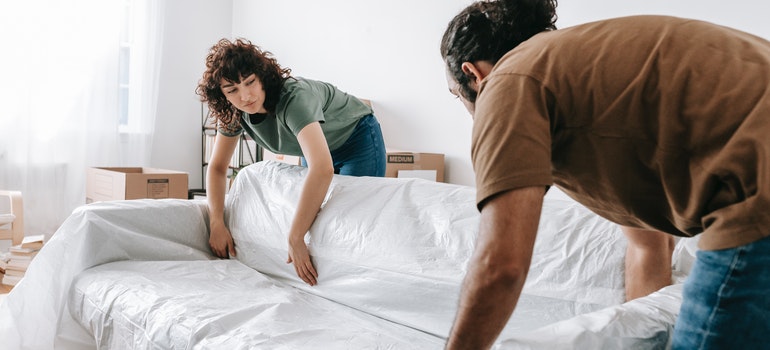
Remove the cushions and pack them separately in bags or boxes — skip vacuum bags, which crush their shape permanently. Unscrew the legs if they come off. Then cover the entire couch in moving blankets until no fabric shows, and secure with stretch wrap around the blankets. Leather is the exception that punishes shortcuts: it needs to breathe, so blankets go on first and no plastic ever touches the leather itself. Couches are also the piece people most often damage in doorways — measure first, and stand them on end to pivot through tight frames the way Spyder’s Memphis movers do it.
How to Pack a Mattress
Slide the mattress and box spring into fitted mattress bags — they are inexpensive and block water, dirt, and tears in transit. Transport the mattress upright against the truck wall, strapped so it can’t fold or slide. Never put an unbagged mattress against the truck floor; it absorbs whatever the last load left there.
How to Pack a Bedroom for Moving
Packing your bedroom for moving works best in a fixed order: clothes first, bed last. You will keep sleeping in the bed until moving day, so start with the closet and dresser. Vacuum bags shrink bulky clothes and bedding to a fraction of their size and are fine for textiles (never for couch cushions). Set aside what you will wear during the moving days, then label every box by room and contents so your crew knows what is fragile and you know where everything landed.
Packing a queen-size bed
A queen-size bed is usually one of the biggest single items in the house — a queen mattress is about 60 inches wide and 80 inches long — so packing a queen-size bed is a two-person job. Strip the bedding and slide the mattress and box spring into fitted mattress bags. Then disassemble the frame: you normally need only a wrench or screwdriver, and if the original manual is gone, look up the disassembly steps for a similar model online rather than forcing a joint.
Drop every screw, nut, bolt, and washer into one labeled zip-top bag and tape it to the headboard wrap. Wrap the headboard, footboard, and rails in blankets, bundle the slats with stretch wrap, and use moving straps or a dolly to get the pieces to the truck. Make sure the truck is large enough for the mattress to ride upright against a wall. Moving a bed through hallways is also where floors and walls get scuffed, so clear the route and pad door frames before you carry anything. Kids’ rooms bring their own challenge, and this guide on how to relocate a bunk bed walks through disassembly and loading.
How Do You Pack a Dining Table for Moving?
A dining table is mostly a big, easily scratched surface on top of breakable joints, so the goal is to separate the two. Work in this order:
- Remove the leaves and wrap each one in a blanket on its own; they scratch each other if stacked bare.
- Unbolt the legs where possible, bundle them in a blanket with stretch wrap, and bag the bolts.
- Wrap the top in a moving blanket, add a sheet of cardboard over the finished side, and secure everything with stretch wrap over the blanket.
- Take off a glass top and pack it like a mirror: paper, corner protectors, cardboard, standing on edge.
- Wrap the chairs one by one and pad the backs where they could rub against the table.
If the legs don’t come off, the table travels upside down on its padded top, never legs-down, where one bump snaps a joint.
How to Pack Dressers and Desks
Bedroom and office furniture follows the disassembly rule most strictly. Empty the junk out of the drawers, but soft unbreakables like clothes can stay in light drawers — it saves boxes. If the dresser is heavy, pull the drawers, wrap them individually, and carry them separately. Remove attached mirrors before anything else, and take hutches off desks. Drawers that stay in get banded shut over the blanket so they can’t slide open on the dolly.
How Should You Pack Mirrors, Glass, and Artwork?
Wrap the piece fully in packing paper (tape on the paper, not the glass), add cardboard corner protectors, then sandwich it between cardboard sheets cut to size or slide it into a mirror box. Standard mirror and picture boxes are about 4 inches deep and fit frames up to roughly 37 by 27 inches; larger and telescoping versions cover big wall mirrors. Mirrors and glass ride standing up against a padded wall, never flat — a stack of anything on top of flat glass ends one way.
What about the tape X? It is optional, and it won’t keep glass from breaking. Low-tack painter’s tape only holds the shards together if the glass does crack, and the Canadian Conservation Institute’s wrapping guidance notes that taping does not always reduce damage. Skip it on anti-glare or coated glass and on acrylic, and peel it off slowly after the move. For a step-by-step version, see these five steps to packing a mirror.
Long trips raise the stakes; interstate movers in Tennessee crate large glass and marble because padding alone isn’t enough across state lines. Canvas paintings and framed prints need a few extra steps, covered in this simple guide to packing artwork.
How to Pack Small Furniture Items and Flat-Pack (IKEA) Pieces
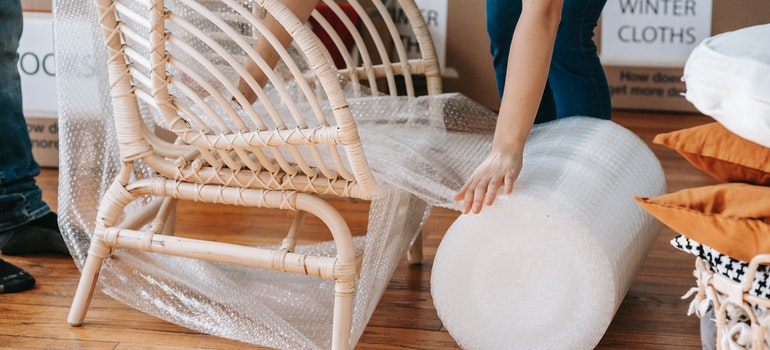
Small pieces — stools, side tables, nightstands, chairs — get the standard two-layer wrap and travel grouped upright. Nest small items in a sturdy box when they fit, and fill the gaps with paper so nothing rattles. Flat-pack furniture is the opposite of solid wood: it’s weakest assembled. Break IKEA-style pieces back down to flat panels, stack them with cardboard between each, bundle with stretch wrap, and tape the hardware bag to the bundle. Moving flat-pack assembled usually cracks the joints even when nothing visibly breaks.
How to Pack Patio and Outdoor Furniture
Outdoor furniture needs one extra step before the standard wrap: get it truly clean and dry. Hose off dirt and pollen, then let everything dry completely — trapped dampness ruins cushions and rusts frames in transit. Pack cushions in plastic bags or boxes, stack chairs and wrap the stack as one unit, and fold or disassemble umbrellas and table legs. Metal frames get the blanket-and-stretch-wrap treatment like wood; glass tabletops travel like mirrors — paper, cardboard sandwich, upright.
How to Move Large and Heavy Furniture Without Damaging the Floor
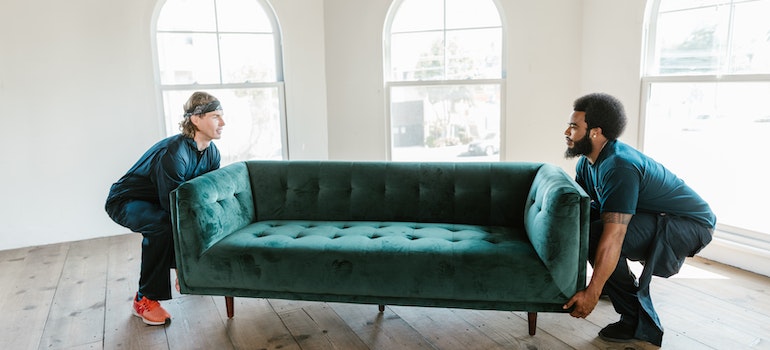
To move heavy furniture without damaging the floor, never drag it: put furniture sliders under each leg on hard floors, lay cardboard or ram board along the carrying route, and use a dolly for the trip to the truck. Measure doorways before lifting anything and clear the route completely.
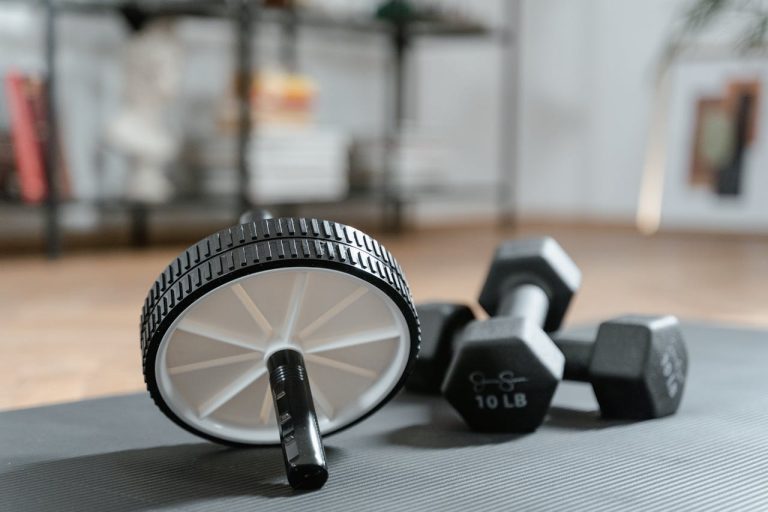
For dressers, armoires, and sectionals, two people is the minimum — trained heavy item movers move oversized pieces in pairs with straps for exactly this reason. Museum collection guidance from the State Historical Society of Iowa sets the bar even lower: use at least two people for anything heavier or bulkier than a typical dining room chair, and grip the sturdiest part of the piece. Lift with your legs, keep the load close, and let the person walking backward set the pace on stairs. Treadmills, weight benches, and dumbbell racks follow the same rules, so plan extra time to pack your home gym equipment before moving day.
Loading Furniture Into the Truck
Load in this order: the heaviest furniture loads first, against the cab wall — couches, dressers, appliances — strapped upright to form a stable base. Mattresses and disassembled panels line the walls. Boxes fill the middle, heaviest low. Mirrors, glass, and artwork go in last, standing vertically against padding. Put cushioning or cardboard between every two surfaces that could rub, and strap each row before starting the next.
Appliances share the front of the truck with your heaviest furniture, but each machine has its own prep rules — the fridge needs to be emptied and defrosted a day before moving day, and the washer needs its transit bolts back in.
How Do You Prepare Furniture for Long-Distance Moving?
Prepare furniture for long-distance moving with the same wrap order, then add protection against what a long trip adds: more handling, hours of vibration, and temperature and humidity swings. Packing is only half the job; the other half is keeping every piece from shifting, rubbing, or opening once the truck is rolling. Before a long-distance move, photograph each piece, list it on your inventory, and ask your mover which valuation option your estimate includes.
How to protect wooden furniture during a move
Wooden furniture takes damage at the corners and edges first, so on a long haul double up there with cardboard corner protectors over the blanket. Use padded furniture covers for valuable or sentimental pieces, add cardboard sheets between any two wooden surfaces that could rub for hours, and strap each piece so it cannot tip. Keep tape on the wrap only; adhesive on the finish leaves residue or lifts the varnish.
Secure drawers, doors, and other moving parts
Drawers, cabinet doors, drop leaves, and swivel bases swing open in transit and damage both the piece and whatever is next to it. Wrap a band of stretch wrap around the body of the piece over the blanket or use a moving strap to hold doors and drawers shut. Remove loose shelves and glass inserts and pack them separately. Detached hardware, casters, and knobs go in labeled zip-top bags taped to the piece they belong to.
How to transport fragile furniture
To transport fragile furniture, take off every breakable part, then make the body impossible to flex or tip. Glass shelves and doors come out and travel in mirror boxes; marble and glass tops ride on edge; antiques that cannot be disassembled travel in one piece, padded on every side. On a long-distance trip, a wooden crate is worth it for glass cabinets, marble, and anything irreplaceable. If a piece is too heavy or valuable to risk, Spyder’s Denver movers and the crews in every other office handle the padding, crating, strapping, and carrying as part of the job.
Packing furniture for shipping instead of a moving truck
Packing furniture for shipping by freight or in a container needs a higher standard than a moving truck, because pallets and containers get forklifted and stacked. Wrap the piece as usual, then box or crate it so the outer layer is rigid, fill every void so nothing moves inside, and label the top and the fragile sides clearly.
Let Spyder Wrap, Load, and Strap Your Furniture
Every section above follows the same short rulebook: disassemble and bag the hardware, breathable layer before plastic, pad the corners and the glass, and load heavy-first with everything strapped upright. Follow it, and your furniture arrives the way it left. Or skip the wrapping altogether — Spyder Moving and Storage is a licensed and bonded mover with its own crews and trucks and offices in Oxford and Hattiesburg, Memphis, Denver, and Colorado Springs, and its packing crews can pack furniture for moving, from flat-pack shelves to antique armoires. Get a free estimate today and let the people who do this every day carry the heavy part.
FAQs
Frequently Asked Questions
Should you wrap furniture in plastic?
Only over a breathable layer. Plastic directly on wood traps moisture and damages the finish, and plastic on leather stops it from breathing. Wrap furniture in a moving blanket or packing paper first, then use stretch wrap over that layer to hold it in place.
Can you leave clothes in dressers when moving?
Yes, if the dresser stays manageable to lift — soft, unbreakable items can stay in the drawers. If the dresser is heavy or fragile, take the drawers out, wrap them individually, and carry them separately.
How do you pack furniture for long-distance moving?
Use the same wrap order but double the protection: corner protectors over the blankets, cardboard between surfaces that could rub, drawers and doors banded shut, and crating for glass, marble, and irreplaceable pieces. Long-distance loads ride for hours and get handled more often, so anything exposed will eventually take a hit.
How do you pack a dining table for moving?
Remove the leaves and legs, wrap each part in a moving blanket, and cover the top with a blanket plus a cardboard sheet held by stretch wrap. A glass top comes off and is packed like a mirror, standing on edge. If the legs don’t come off, the table travels upside down on its padded top.
How do you transport fragile furniture?
Remove every breakable part first — glass shelves, doors, and marble or glass tops — and pack those separately on edge in mirror boxes or crates. Pad the body on every side, strap it upright so it can’t tip, and keep anything heavy from being stacked on it.
How do you wrap furniture for moving and storage?
For storage, wrap furniture in breathable covers only — moving blankets or cotton sheets, never sealed plastic. Plastic traps humidity against the surface and causes mold and warping over months. Elevate pieces off the floor and choose a climate-controlled storage unit for wood and upholstery.
Do movers pack furniture for you?
Yes. Full-service movers disassemble, wrap, load, and reassemble furniture as part of a packing service, including specialty pieces like antiques, glass cabinets, and oversized items. Spyder Moving and Storage offers packing and unpacking services for the whole home or only for the pieces you don’t want to risk.
Free, no-obligation estimate
Get your free moving quote
Tell us where you are moving from and to, and our team will get back to you with a quote. Serving Mississippi, Tennessee and Colorado. Prefer to talk? Call (800) 221-3560.
"*" indicates required fields