
5 Steps to Packing a Mirror

Key takeaways
Pack a mirror in five steps: gather packing paper, bubble wrap, corner protectors, and a mirror box; wrap the glass and frame in paper, then bubble wrap or a blanket; add low-tack tape to the glass if you want shards held together; cover all four corners; and box it snugly. In the truck, a mirror always rides on its edge, strapped between mattresses or flat furniture, never lying flat. Large and frameless mirrors need extra edge guards, a telescoping box or cardboard sandwich, and two people to carry.
To pack a mirror for moving, you need five steps: get the right materials, wrap the glass and frame, tape the glass if you want extra shard protection, cover the corners, and put the mirror in a snug mirror box that rides on its edge, never flat. Mirrors break at the corners and edges, or when something heavy lands on them, so every step targets one of those risks. Follow the 5 steps to packing a mirror below, plus the extra steps for large and frameless mirrors.
How Do You Pack a Mirror for Moving?
Pack a mirror for moving by building layers around it: soft paper against the glass and frame, bubble wrap or a moving blanket over that, rigid corner protectors, and a mirror box or a cardboard sandwich on the outside. Then stand it on edge in the truck. If you would rather not do it yourself, Spyder’s moving services include professional packing, so the choice is yours. Here are the 5 steps in short:
- Get the right packing materials: packing paper, bubble wrap, corner protectors, tape, and a mirror box sized to the mirror.
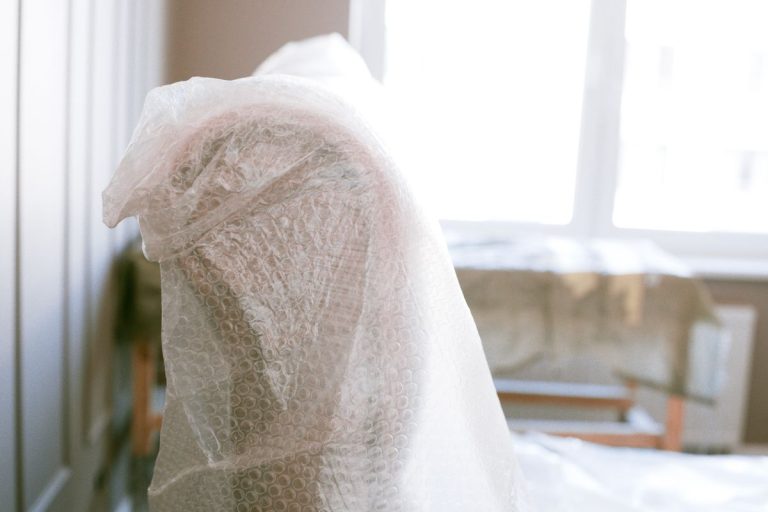
- Wrap it properly: paper first, then bubble wrap or a blanket over the whole mirror.
- Tape the glass (optional): low-tack tape in an X or a grid only holds shards together if the glass breaks.
- Protect the corners and edges: cardboard or foam corner protectors on all four corners.
- Box it and label it: a snug mirror box, no room to slide, marked “Fragile – Mirror – Do Not Lay Flat.”
Which materials you need depends on the mirror. The table covers the common types.
| Mirror type | Wrap | Outer protection | How it travels |
|---|---|---|---|
| Small framed wall mirror | Packing paper, then bubble wrap | Corner protectors, mirror box or a small box padded with paper | On edge, inside a box of soft items or between flat boxes |
| Large framed or full-length mirror | Packing paper, then a moving blanket or two layers of bubble wrap | Corner protectors, telescoping mirror box or cardboard sandwich | On edge against the truck wall or between mattresses, strapped |
| Frameless mirror | Packing paper over the face and back | Edge guards along every side, cardboard sheets on both faces, mirror box | On edge, never with weight on the bare edge alone |
| Antique or ornate gilded frame | Acid-free paper or glassine; no tape or plastic on the frame | Thick padding, custom crate for valuable pieces | On edge, padded on all sides, loaded last |
| Dresser or vanity mirror | Removed from the furniture, then wrapped like a framed mirror | Corner protectors, mirror box; hardware bagged and taped to the dresser | On edge, separately from the dresser |
You can do all of this before Spyder’s Memphis movers arrive, or leave it to the crew.

The 5 Steps to Packing a Mirror the Right Way
Mirrors are tricky to pack because the glass is heavy for its thickness and the edges are its weak spot. Work on a clean, padded surface, such as a moving blanket on the floor or a bed, and keep the mirror face up while you wrap it. If you are short on time or the mirror is large, packing services from our Memphis team can take it off your list.
Step 1: Buy the right packing materials
The first thing to do is buy the right moving materials. Old clothes and towels help with dishes, but they slip off glass and leave the corners exposed. For a mirror, gather:
- Plain packing paper (not newspaper, the ink can transfer)
- Bubble wrap or a moving blanket
- Cardboard or foam corner protectors
- Low-tack painter’s tape for the glass and packing tape for the box
- A mirror or picture box, many of which telescope to fit larger sizes
- Extra flattened cardboard if you are making your own box
Moving supplies are easy to find at moving-truck rental locations and home improvement stores. If you are moving in or around Germantown, Spyder’s Germantown movers can also handle the packing for you.
Step 2: Learn how to wrap the mirror properly
Next, wrap the mirror properly, which is the step most people rush. Lay a few sheets of packing paper over the glass and fold them around the frame, like wrapping a gift, so nothing plastic or sticky touches the frame finish. Then cover the whole mirror with bubble wrap or a moving blanket and secure it with tape on the wrap only. A large mirror for a residential move in Memphis or anywhere else gets two layers of bubble wrap or a full blanket.
Step 3: Tape the mirror (optional)
Why tape a mirror when moving? Not to stop it from breaking: tape doesn’t make glass stronger. A taped X or grid of low-tack painter’s tape only holds the pieces together if the mirror cracks, which makes cleanup safer and protects the rest of the box. Whether you are packing a family home or a student move with a single dorm mirror, put tape only on the glass, never on the frame, remove it soon after the move, and skip it on antique or coated glass, where peeling tape can damage the surface.
Step 4: Protect the edges and corners
Edges are the soft spot of any glass, and mirrors are no different. Slide a cardboard or foam corner protector over each corner, and on a frameless mirror add edge guards along every side. Be extra careful when carrying the mirror to the vehicle: one knock of an edge against a door frame is enough to crack the glass. Glass ornaments and framed holiday pieces call for the same edge protection, which is one of the basics of packing holiday decorations safely.
Step 5: Pack it into a mirror box
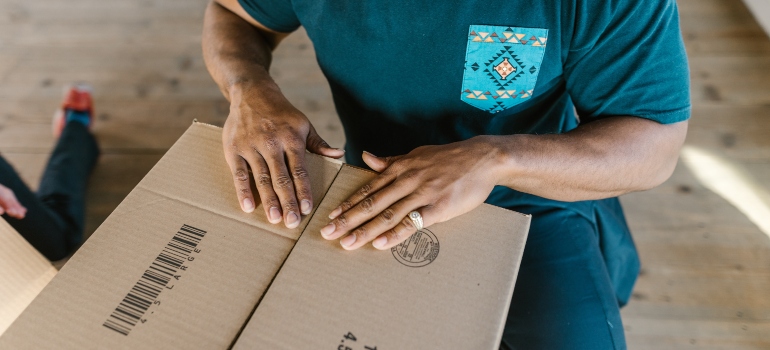
To transport your mirror without issues, put it into a mirror box that fits closely, then fill any gap with crumpled paper so the mirror can’t move when you shake the box gently. Tape all seams and label two sides “Fragile – Mirror” with an arrow showing which edge goes down. That completes the 5 steps.

Moving in Mississippi, Tennessee or Colorado?
Spyder Moving gives free, no-obligation quotes. Licensed, bonded and insured.
How Do You Pack a Large Mirror for Moving?
A large or full-length mirror follows the same five steps with three changes: more padding, a rigid outer layer, and two people. Wrap it in paper and a full moving blanket, put corner protectors on all four corners, and use a telescoping mirror box (two box halves that slide over each other to fit the length). Always carry a large mirror vertically, one person at each end, holding the frame, not the glass.
Large frameless mirrors, such as gym or bathroom mirrors that were glued or clipped to the wall, are the hardest to move. Take them down carefully, since glued mirrors can crack while being pried off, and give them edge guards on every side plus cardboard sheets on both faces. For a very large, antique, or valuable mirror, a custom wooden crate is the safest option.
How to pack a mirror without a mirror box
No mirror box? Build a cardboard sandwich. Cut two pieces of flat cardboard a few inches larger than the wrapped mirror on every side, place the mirror between them, and tape the edges all the way around. For extra protection, fold the overhanging cardboard into a frame or add a third sheet. The result works like a box as long as the mirror stays on edge and nothing heavy leans on it.
How Do You Protect Mirrors When Moving?
Packing is only half of it; mirrors also break in the truck. Protect mirrors when moving with these loading rules:
- Always on edge. A mirror lying flat flexes under its own weight and anything stacked on it. Stand it on its long edge.
- Sandwiched and strapped. Place it between mattresses, against a padded wall, or between flat, sturdy furniture, then strap it so it can’t tip.
- Nothing leaning on it. Keep heavy boxes, tools, and furniture legs away from the glass.
- In a car or SUV. Stand the boxed mirror on edge behind the front seats or in the cargo area, wedged with pillows or blankets, with nothing loaded on top of it.
- Unload with care. Carry mirrors out on edge and leave them boxed, standing on edge, until you are ready to hang them.
Museums use the same principles for framed glass. The Canadian Conservation Institute’s guide to wrapping framed works describes low-tack tape on the glass to hold shards, cushioned corner covers, and rigid cardboard over the front, and advises removing the tape gently soon after the trip.
Find Another Solution for Your Mirrors
Some mirrors are too valuable or too large to risk packing yourself, and that is when a professional crew makes sense. If you are not ready to hang them yet, or you need time to find the right spot in the new home, Spyder’s storage services can keep packed mirrors safe until you are. Once you are ready to set your mirror up, it comes out of storage still boxed and on edge.
If a mirror does crack despite all this, don’t stress. Broken mirrors don’t bring bad luck, and a local glass shop can often replace the glass in a frame you love. Spyder Moving and Storage packs mirrors, artwork, and other fragile pieces as part of its packing services, from offices in Mississippi, Tennessee, and Colorado. Get a free estimate and let a trained crew handle packing a mirror for you.
Frequently Asked Questions
How do you pack a mirror for moving?
Wrap the mirror in packing paper, then bubble wrap or a moving blanket, put corner protectors on all four corners, and place it in a snug mirror box filled with crumpled paper. Label the box "Fragile – Mirror" and keep it standing on edge during the move.
How do you pack a large mirror for moving?
Use the same layers as a small mirror but more of them: paper, a full moving blanket or two layers of bubble wrap, corner protectors, and a telescoping mirror box or cardboard sandwich. Carry it vertically with one person at each end, and crate very large or valuable mirrors.
How do you transport a large mirror?
Transport a large mirror boxed and standing on its long edge, never flat. Place it between mattresses or against a padded truck wall, strap it so it can't tip, and keep anything heavy from leaning on it.
Why tape a mirror when moving?
Taping a mirror doesn't stop it from breaking; a taped X or grid of low-tack tape only holds the pieces together if the glass cracks. Put tape on the glass only, remove it soon after the move, and skip it on antique or coated mirrors.
How do you pack a mirror for moving without a box?
Make a cardboard sandwich: wrap the mirror in paper and bubble wrap, place it between two sheets of flat cardboard a few inches larger on every side, and tape the edges all the way around. Keep it on edge so nothing heavy rests on it.
How do you ship a mirror?
Pack the mirror as for a move, with paper, bubble wrap, and corner protectors in a snug mirror box, then place that box inside a larger shipping box with cushioning on every side. Mark it fragile, and use a custom crate for large or valuable mirrors.
Free, no-obligation estimate
Get your free moving quote
Tell us where you are moving from and to, and our team will get back to you with a quote. Serving Mississippi, Tennessee and Colorado. Prefer to talk? Call (800) 221-3560.
"*" indicates required fields