

How to Relocate a Bunk Bed

Key takeaways
To relocate a bunk bed, remove the mattresses, ladder, and guardrails, lift the top bunk off with a helper, and break both frames into flat end panels, rails, and slats. Bag and label the hardware by location, wrap frame parts in moving blankets, and seal each mattress in a mattress bag. After reassembly, check that the upper bunk has guardrails on both sides that sit at least 5 inches above the mattress, as CPSC rules require, and keep children under 6 off the top bunk.
To relocate a bunk bed, you take it apart, bag and label every bolt, wrap the frame pieces and mattresses separately, and put it back together at the new home with the guardrails and ladder checked before anyone sleeps on the top bunk. Bunk beds are tall, heavy, and wider than most doorways once assembled, so moving one in one piece is rarely an option. The good news is that the job takes basic tools, a second pair of hands for one step, and some organization. Below is the full process, from the first screw to the final safety check, plus when it makes sense to let a moving crew handle it.
Can you move a bunk bed without taking it apart?
In almost every case, no. An assembled bunk bed is usually too tall to tip through an interior door and too heavy and unbalanced for two people to carry down a staircase safely. The upper bunk also puts all its weight on joints that were designed to hold a load standing still, not to be lifted, tilted, and bumped. Carrying the bed whole risks cracked posts, stripped bolt holes, and injuries, which is why movers who handle heavy and awkward items take bunk beds down to flat pieces before loading.
Before you start, gather the tools for the hardware your bed uses. Most bunk beds are held together with hex bolts and barrel nuts, wood screws, or a mix of both:
- Allen keys (hex keys) in the sizes your bed uses, often the one that came in the box
- Phillips and flathead screwdrivers
- A cordless drill with matching bits, set to a low clutch so it doesn’t strip the screws
- Zip-top bags, a permanent marker, and painter’s tape for labeling
- Moving blankets or old sheets, stretch wrap, and mattress bags
Bunk bed moving steps at a glance
| Stage | What to do | Tools and materials |
|---|---|---|
| Prepare | Strip bedding, remove mattresses, find the assembly manual or photograph the bed | Phone camera, manual or model number |
| Disassemble | Remove ladder and guardrails, lift off the top bunk with a helper, break both frames into ends, rails, and slats | Allen keys, screwdrivers, cordless drill |
| Bag hardware | Bag bolts and screws by part, label each bag, tape bags to the matching piece or keep them in one parts box | Zip-top bags, marker, painter’s tape |
| Protect | Wrap frame pieces in blankets, bundle slats, seal mattresses in mattress bags | Moving blankets, stretch wrap, mattress bags |
| Load | Long rails and end panels against the truck wall, slats flat, mattresses on edge and strapped | Straps, dolly for heavy end panels |
| Reassemble | Rebuild the bottom bunk, stack the top with a helper, reattach guardrails and ladder, check every bolt | Same tools, the labeled hardware bags |
How do you take apart a bunk bed step by step?
Taking apart a bunk bed is mostly a matter of working in the reverse order of assembly. If you still have the manual, keep it next to you. If not, search the manufacturer’s website for your model number, which is usually on a label on the inside of a side rail or headboard. Manufacturers often post assembly instructions as PDFs.
Step 1: Strip the bedding and remove the mattresses
Take off sheets, pillows, and blankets, then lift both mattresses out. Removing the weight first makes the frame lighter and lets you see every bolt and slat.
Step 2: Photograph the bed before you loosen anything
Take photos of each corner, the ladder brackets, the guardrail connections, and the slats from below. These photos are your backup manual. They show which way the side rails face and where each bracket sits, details that are easy to forget a week later.
Step 3: Remove the ladder and guardrails
Unscrew the ladder first, then the guardrails on the upper bunk. These are the pieces most likely to get bent or lost, so bag their hardware right away (more on that below).
Step 4: Lift the top bunk off the bottom bunk
This is the one step you should never do alone. On most bunk beds the top frame sits on connecting pins or dowels in the corner posts of the bottom frame. Remove any bolts that lock the two together, then lift the top bunk straight up with one person at each end and set it on the floor. If the bed is a model that is bolted together as one tall frame, have your helper hold the upper section steady while you remove the last bolts so nothing drops.

Step 5: Break each frame into flat pieces
With both bunks on the floor, remove the slats or support panel, then unbolt the side rails from the headboard and footboard. You should end up with two end panels, two side rails, and a set of slats per bunk. Flat pieces stack neatly in a truck and are far less likely to crack than a half-assembled frame.
Moving in Mississippi, Tennessee or Colorado?
Spyder Moving gives free, no-obligation quotes. Licensed, bonded and insured.
How should you bag and label bunk bed hardware?
Lost hardware is one of the easiest ways to end up with a bunk bed that can’t be put back together on move-in night. Bunk beds often use several bolt lengths, and a short bolt in a spot meant for a long one won’t hold the frame tight.
- Bag by location, not by type. Use one zip-top bag for the ladder, one for the guardrails, one for the top-to-bottom connectors, and one per corner or rail.
- Write on each bag what it holds and where it goes, for example “Top bunk guardrail, wall side.”
- Tape each bag to the piece it belongs to with painter’s tape, which peels off without damaging the finish, or put all bags in one small box marked “Bunk bed hardware.”
- Add the Allen key and the manual to the same box so everything needed for reassembly travels together.
- Put a matching strip of painter’s tape on each rail and its slot, numbered or lettered, so the pieces match up later.
If a bolt is stripped or a barrel nut spins in place, note it on the bag. It is easier to order replacement hardware from the manufacturer before the move than to discover the problem when the kids need a bed.
How do you protect bunk bed mattresses and frame parts in transit?
Wrap each end panel and side rail in a moving blanket or an old sheet and secure it with stretch wrap, keeping the wrap off painted or lacquered surfaces where possible so it doesn’t stick in a hot truck. Bundle the slats with stretch wrap or twine so they stay together. Metal bunk beds need the same padding: bare metal tubes scratch other furniture and dent drywall when they’re carried through tight hallways.
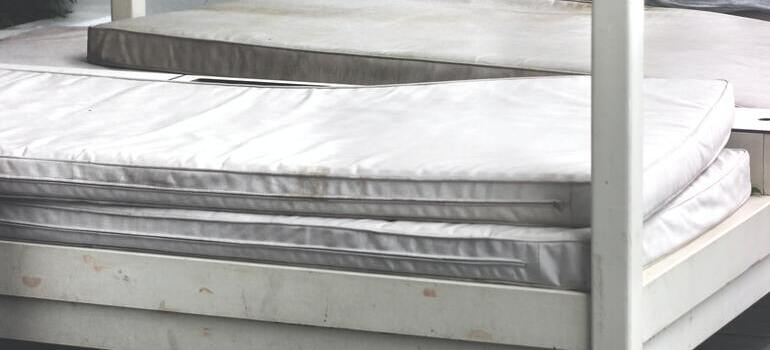
Bunk bed mattresses are usually thin twins, which makes them easy to bend and crease. Vacuum both mattresses, let them air out, and seal each one in a plastic mattress bag to keep out dust, moisture, and bugs. Store and load them standing on their long edge rather than folded or laid under heavy boxes. If you are packing the rest of the bedroom at the same time, our full guide to packing furniture for moving covers dressers, desks, and other pieces that usually travel with a kids’ room.
Can you move a bunk bed by yourself?
You can handle most of the job alone: stripping the bed, unscrewing the ladder and guardrails, bagging hardware, wrapping parts, and carrying slats and side rails. Two steps need a helper, though. Lifting the top bunk off the bottom bunk is one, because the frame is heavy and awkward overhead. Carrying solid-wood end panels down stairs is the other, since they are heavy and hard to grip. A furniture dolly helps with the end panels on flat ground.
When you load the truck, place the end panels and long side rails upright against the truck wall and strap them in place. Lay the slat bundles flat on top of sturdy boxes or along the floor, and stand the bagged mattresses on edge next to other soft items. Keep the hardware box in the cab or in the box of “open first” items so it can’t get buried. For more on renting and using the right gear, see our list of moving tools and equipment for DIY moving.
Is there a service that will dismantle a bunk bed for you?
Yes. Many full-service moving companies take beds apart and put them back together as part of the move, but it is not automatic everywhere, so confirm it when you get your estimate. If you book residential movers for a family home, ask whether disassembly and reassembly of beds is included and mention how many bunk beds you have, since each one adds time. Schools, camps, dormitories, and rental properties that need to move several bunk beds at once can ask about commercial moving instead.
Spyder Moving and Storage crews also offer packing and unpacking services, which is useful if the bunk bed is one of many bulky pieces in the house. If you’re replacing the bunk bed instead of moving it, junk removal can haul the old frame away so you don’t have to load it at all.
How do you reassemble a bunk bed safely after the move?
Rebuild the bed in the reverse order you took it apart: assemble the bottom bunk, add its slats, lift the top bunk onto the connectors with a helper, then attach the slats, guardrails, and ladder. Use your photos and labeled bags, and hand-tighten every bolt first, then go around and tighten them fully once the frame is square.
The U.S. Consumer Product Safety Commission sets federal requirements for bunk bed design, and they double as a useful checklist after reassembly. According to the CPSC bunk bed safety requirements, check the following before anyone sleeps up top:
- Guardrails on both sides of the upper bunk. The rule calls for at least two upper guardrails, one on each side, and the rail on the wall side must run continuously from end to end.
- Guardrails high enough above the mattress. The top of each guardrail must be at least 5 inches above the top of the mattress, so use the mattress size and thickness the manufacturer specifies. A thicker replacement mattress can make the rail too low.
- No gaps that can trap a child. Openings in the bed ends and between the guardrail and frame are regulated to prevent entrapment, so reattach every rail in its original position and don’t leave a gap between the bed and the wall.
- Keep young children off the top bunk. CPSC requires a warning label telling parents not to put children under 6 on the upper bunk.
Finally, push and pull on the frame. If it sways or creaks, go around again and tighten the bolts, and make sure the ladder is firmly attached. Check the bolts again after a week or two of use, since wood frames can settle after a move.
When you relocate a bunk bed with a plan, it’s a few hours of work instead of a lost weekend. If you’d rather have a crew take it down, move it, and set it up again with the rest of your home, Spyder Moving and Storage has offices in Oxford and Hattiesburg, MS, Memphis, TN, and Denver and Colorado Springs, CO. Request a free estimate and mention your bunk beds so the crew plans for them.
Frequently Asked Questions
Do movers dismantle bunk beds?
Many full-service movers will take a bunk bed apart and reassemble it at the new home, but it is not included everywhere, so ask when you request your estimate. Mention how many bunk beds you have so the crew plans the time, and check whether residential movers include bed disassembly in the quote.
Can you move a bunk bed by yourself?
You can do most of the work alone, including removing the ladder and guardrails, bagging hardware, and wrapping parts. Lifting the top bunk off the bottom bunk and carrying heavy end panels down stairs should always be done with a second person.
How do you take apart a bunk bed?
Strip the bedding and remove both mattresses, photograph the bed, then unscrew the ladder and guardrails. With a helper, lift the top bunk off its connectors, and finally unbolt each frame into headboard, footboard, side rails, and slats, bagging the hardware for each part separately.
Should a disassembled bed be packed with its hardware attached?
Yes, keep the hardware with the bed: put the bolts and screws for each part in a labeled zip-top bag and tape it to that part with painter's tape, or store all bags in one box marked for the bed. Add the Allen key and the assembly manual to the same box so reassembly doesn't stall.
How do you pack a bed for moving?
Take the bed frame apart into flat pieces, wrap each piece in a moving blanket secured with stretch wrap, and bundle the slats together. Seal the mattress in a plastic mattress bag and load it standing on its long edge so it doesn't bend or crease.
How do you get rid of a bunk bed you don't want to move?
Take the bunk bed apart the same way you would for a move, then sell it, donate it if it is in good condition with all its hardware, or book junk removal to haul the frame away. Disassembling it first makes it much easier to carry out of the house.
Free, no-obligation estimate
Get your free moving quote
Tell us where you are moving from and to, and our team will get back to you with a quote. Serving Mississippi, Tennessee and Colorado. Prefer to talk? Call (800) 221-3560.
"*" indicates required fields