Helpful Steps for Storing Furniture Long-Term

Key takeaways
Storing furniture long-term without damage starts with a stable, climate-controlled unit (the EPA recommends keeping humidity below 60%, ideally 30–50%, to prevent mold) instead of an attic, basement or garage. Clean each piece by material, disassemble what you can, wrap it in moving blankets rather than plastic, and keep everything off the concrete floor on pallets with space for air and a walkway.
Storing furniture long-term is not just a matter of finding space and hoping for the best. Moisture, temperature swings, pests and improper stacking cause most of the damage that happens in storage, and most of it is preventable with the right preparation. There are many reasons people rent storage units for furniture: between homes, during a renovation, or to hold onto pieces they are not ready to part with. Whatever the situation, what you do before the unit door closes decides what condition everything comes out in. This guide walks through each step in the right order, from choosing the unit to arranging it.
Where is the best place for storing furniture long-term?
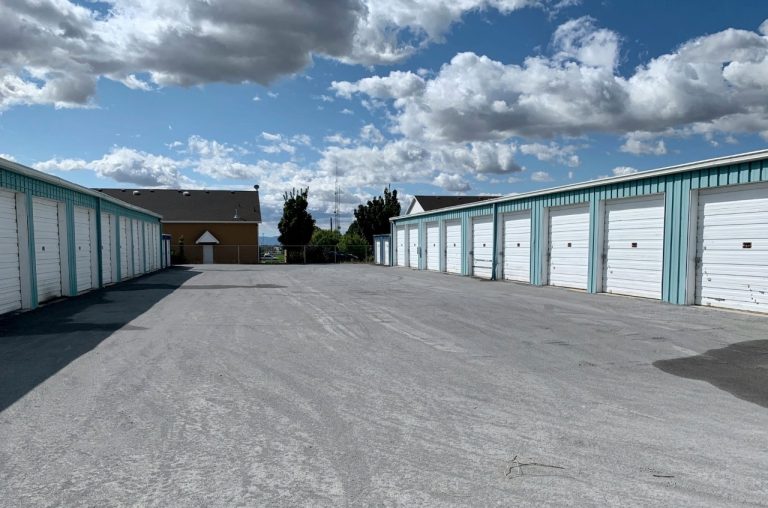
The first decision is the place. Furniture needs a space that is protected from the elements and keeps temperature and humidity as steady as possible. The Canadian Conservation Institute warns that attics, basements and garages are poor places for furniture because conditions in them swing through the year, and they are the first spaces to leak, flood or let pests in. That leaves two realistic options: a storage unit, or storage arranged through your moving company.
A climate-controlled unit costs more than a standard drive-up unit, so it is worth matching the unit to what you store. If you are moving within the state with movers in Tennessee, for example, the hot and humid summers make climate control far more important for a wood dining set or an upholstered sofa than for plastic patio chairs.
Before you pack anything, check what each material needs:
| Material | Clean before storage | Wrap with | Avoid |
|---|---|---|---|
| Wood | Dust with a soft cloth; thin coat of paste wax if you want extra protection | Moving blankets or furniture pads | Stretch wrap or plastic directly on the finish; oils that “feed” the wood |
| Upholstery | Vacuum, spot-clean, dry completely | Breathable furniture covers or cotton sheets, then blankets | Sealing it in plastic sheeting |
| Leather | Wipe clean and apply a leather conditioner | Breathable cotton covers | Plastic, direct sunlight, heavy items on top |
| Metal | Wipe dry; thin coat of paste wax or oil on bare steel | Blankets on corners and edges | Storing it damp |
| Glass and mirrors | Glass cleaner, dry thoroughly | Bubble wrap, cardboard corners, mirror boxes | Laying them flat with weight on top |
| Mattresses | Vacuum and air out | Breathable mattress bag | Standing them on edge for long periods |
How do you choose the right storage unit for furniture?
Climate-controlled storage is the practical choice for furniture you plan to keep for a long time. Wood absorbs and releases moisture as humidity changes, which causes warping, cracking and swelling. Upholstered pieces develop mold and mildew in damp air, and metal hardware corrodes. The Canadian Conservation Institute’s main advice for furniture is simply a stable environment, and the EPA recommends keeping indoor humidity below 60 percent, ideally between 30 and 50 percent, to prevent mold. Ask any facility what temperature and humidity range its climate-controlled units actually hold, since some units are only heated and cooled while others also manage humidity.
Non-climate-controlled units are cheaper and fine for tools, plastic containers or outdoor equipment. For wood, upholstery and leather over any meaningful period, especially where summers are hot and winters are cold, conditions inside an uncontrolled metal unit can swing hard. For most furniture, the price difference is smaller than the cost of repairing a warped table.
Before committing, work out the right storage unit size from your actual inventory. Paying for space you don’t use adds up quickly over months, but a unit packed too tight leaves no room for airflow or access.
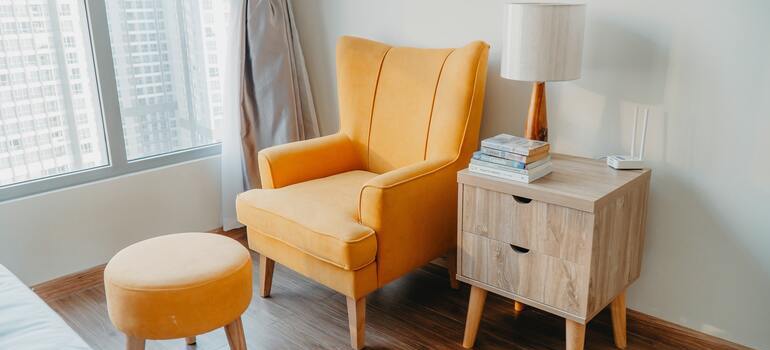
Clean everything before it goes in
Any dirt, grease, food residue or moisture left on furniture before long-term storage will either stain permanently or feed mold and pests. By the time you open the unit and discover it, the damage is usually done. Cleaning before storage is the most important prep step, and the method depends on the material:
- Wood: Dust with a soft cloth and a wood-safe cleaner. If you want a protective layer, a thin coat of paste wax is enough; heavy polishes and oils are not needed.
- Upholstered pieces: Vacuum thoroughly, then spot-clean any stains. Let the piece dry completely before wrapping, because trapping moisture inside the wrap is worse than leaving the piece uncovered.
- Leather: Clean and treat with a leather conditioner, since leather dries out and cracks when left untreated for months.
- Metal: Wipe dry and apply a thin layer of machine oil or paste wax to slow rust.
- Glass: Clean with glass cleaner, dry thoroughly and wrap immediately after.
Use a cleaner made for each surface type and test it on a hidden spot first, because the wrong cleaner can damage finishes before the piece even reaches the unit.
Disassemble what you can
Furniture that breaks down should be broken down. Table legs, bed frames, shelving units and sectional pieces store more efficiently and more safely as components. Assembled furniture takes up more floor space, creates awkward stacking problems and puts stress on joints that aren’t designed for sideways loads or long periods of static pressure.
When disassembling, keep all hardware, screws, bolts, cam locks and legs, in labeled zip-lock bags and tape them to the piece they belong to. Photograph anything complex before taking it apart. Wrap individual components separately rather than bundling everything back together loosely. Our guide on how to pack furniture for moving covers the tools and steps in more detail.
One important exception: mattresses should be stored flat, not upright. Standing a mattress on its edge for months lets the internal coils and foam shift and sag.
How to pack furniture for climate-controlled storage
Wrapping protects furniture from dust, surface scratches and incidental moisture. Even in a climate-controlled unit, the material you use matters more than most people realize:
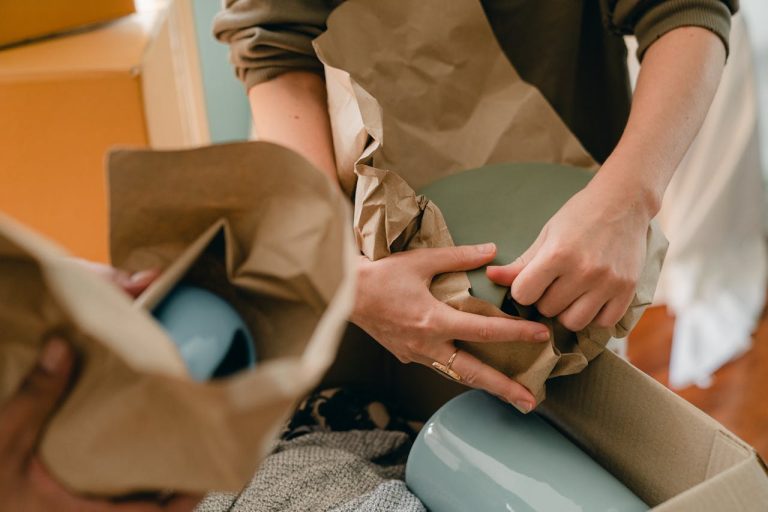
- Moving blankets are the best all-purpose choice. They cushion surfaces, breathe to prevent moisture buildup and stay in place. Wrap them around corners, edges and any finished wood or glass surfaces.
- Stretch wrap is useful for bundling table legs together or keeping drawers closed during transport, but don’t apply it directly against wood or upholstery. It traps moisture and can mark finishes over time.
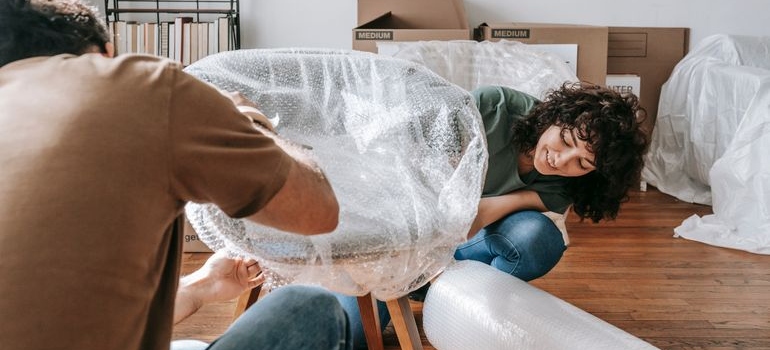
- Bubble wrap works for glass tabletops, mirrors and fragile decorative pieces, but not for large furniture, where it can hold humidity against the surface. Paintings and framed prints have their own rules, so learn how to pack artwork safely before they go into storage.
- Cardboard gives useful corner and edge protection, but absorbs moisture quickly in any non-climate-controlled space, so use it with caution.
Never cover upholstered pieces entirely in plastic sheeting. If a moving company is taking the furniture to storage, professional packing and furniture wrapping services are worth considering, since crews wrap pieces with pads and blankets as a routine part of the job.
How to arrange a storage unit for furniture
How you arrange the storage unit is as important as how you prep each piece. Poor arrangement leads to pressure damage and restricted airflow, and makes the unit nearly impossible to access without unloading everything.
A few rules hold across every type of unit:
- Never place furniture directly on the floor. Concrete floors are cold and hold moisture. Use wooden pallets, furniture risers or plywood sheets as a barrier, even in climate-controlled units.
- Heavy items go on the bottom, lighter ones on top. Stacking a heavy dresser on a fabric armchair will damage both.
- Leave a few inches between furniture and the walls. Air needs to circulate so moisture from exterior walls does not move into your pieces.
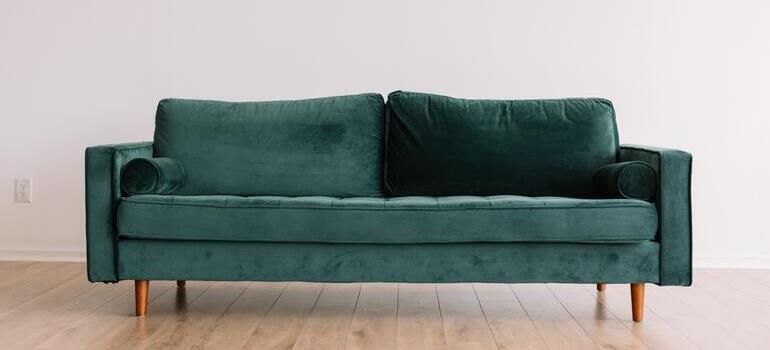
- Store sofas on their ends only when floor space forces it, and lay them flat again as soon as you can, since long periods on end stress the frame and cushions.
- Keep a walkway through the unit. If you need something mid-storage, you shouldn’t have to unpack everything to reach it.
How to store furniture between moves
Storage between moves is common when a closing date slips, a new home is not ready, or you are relocating out of state and need time to find the right place. Short gaps call for the same prep as long ones, because you rarely know in advance how long the gap will last. Two things are different. First, plan the unit around access: put the pieces you will need first near the door. Second, if your mover stores the furniture, ask how it is protected while in their care.
For interstate moves, federal rules give you two levels of mover liability: Released Value, which is free but limited to 60 cents per pound per article, and Full Value Protection, under which the mover is liable for the replacement value of lost or damaged goods. Ask which one applies while your furniture is in the mover’s storage. Spyder offers storage services alongside interstate moving, so packing, storage and delivery can be booked with one company. The FMCSA explains both options in its guide to mover liability and protection.
How long can you store furniture before it degrades?
With proper preparation and a stable, climate-controlled unit, solid wood furniture can last for years in storage. Upholstered pieces do better the shorter the storage period, because fabric and foam age slowly even in good conditions, and leather needs reconditioning if it is stored for a long time.
A rough guide by duration:
- A few months: Well-prepared furniture usually comes through fine, though climate control still protects wood and upholstery in hot or humid seasons.
- Six months to two years: Climate control becomes important; check on upholstered and leather pieces every few months.
- Over two years: Recondition wood and leather at least once a year, and decide whether long-term storage still makes more sense than selling or replacing the piece.
Pests are the other slow threat. These tips on preventing pest infestations in long-term storage help keep wood and fabric safe between visits.
Extra steps when storing expensive furniture
Antiques, designer pieces and custom-made furniture need the same preparation as everything else, only with less room for error. Restoring a damaged high-end piece can cost more than replacing an ordinary one, so a few extra precautions are worth the time.
- Treat custom hardware as irreplaceable. Screws, hinges and fittings on custom furniture often can’t be bought again. Bag and label every part, and be especially gentle when taking the piece apart.
- Have fine upholstery professionally deep-cleaned before storage instead of spot-cleaning it yourself, and make sure it is completely dry before wrapping.
- If glass can’t be removed, treat the whole piece as glass. Wrap it in thick, soft fabric, then pad the full piece, not just the glass panel.
- Protect against pests and fading. Unfinished wood attracts insects and light fades finishes, so keep pieces fully covered with breathable fabric and away from any light source in the unit.
- Support the legs of heavy pieces. Set tall wardrobes and cabinets on padding or risers so their legs don’t carry the full weight on bare concrete for months.
Before you close the unit door
Getting storing furniture long-term right comes down to a few decisions made before anything goes in: choosing a stable, climate-controlled unit, cleaning by material, disassembling what you can, wrapping with breathable materials and arranging the unit so air and access are both accounted for. The time spent on prep is always less than the time spent dealing with damage after the fact.
Spyder Moving and Storage packs, moves and stores furniture with its own crews and trucks from offices in Oxford and Hattiesburg, Mississippi, Memphis, Tennessee, and Denver and Colorado Springs, Colorado. If you need help wrapping and moving furniture into storage, get a free quote from Spyder Moving and Storage.
FAQs
Frequently Asked Questions
Does furniture need a climate-controlled storage unit?
For wood, upholstered and leather furniture stored for more than a short gap, yes, especially in hot or humid seasons. Swings in temperature and humidity warp and crack wood, grow mold on fabric and corrode metal hardware, and the EPA recommends keeping humidity below 60 percent, ideally 30 to 50 percent, to prevent mold.
Can you store a sofa long-term without damage?
Yes, with proper prep. Vacuum and clean it thoroughly, let it dry completely, wrap it in moving blankets or a breathable cover rather than plastic, and keep it flat on pallets in a climate-controlled unit; stand it on end only when space forces it, and not for long.
Should furniture be disassembled for storage?
Yes, where the piece was designed to come apart. It saves space, reduces stress on joints and makes each component easier to wrap; bag and label the hardware and tape it to the piece it belongs to.
How do you protect wood furniture during long-term storage?
Dust it, add a thin coat of paste wax if you want extra protection, wrap it in moving blankets, keep it off the floor and store it in a climate-controlled unit with stable humidity. Check on it every few months if it is stored for more than a year.
How do you pack furniture for climate-controlled storage?
Pack furniture for climate-controlled storage by cleaning and drying each piece, removing legs and hardware, and wrapping it in breathable moving blankets, with bubble wrap only on glass and mirrors. Avoid stretch wrap or plastic directly on wood and upholstery, because it traps moisture even in a controlled unit.
How do you store furniture between moves?
Store furniture between moves with the same prep as long-term storage, because gaps often last longer than planned, and load the pieces you will need first near the unit door. If your mover stores it during an interstate move, ask whether Released Value (60 cents per pound per article) or Full Value Protection applies while it is in storage. Spyder Moving and Storage offers storage services alongside its moves.
Free, no-obligation estimate
Get your free moving quote
Tell us where you are moving from and to, and our team will get back to you with a quote. Serving Mississippi, Tennessee and Colorado. Prefer to talk? Call (800) 221-3560.
"*" indicates required fields