How to Store Items During a Home Renovation

Key takeaways
During a home renovation you can cover furniture in place for cosmetic work, but flooring, kitchen or whole-floor projects mean moving items to an unused room or garage, a portable container, a storage unit or a mover's storage. Pack and number boxes before demolition, keep documents and valuables with you, and store paint, flooring and batteries off concrete and away from heat. In humid climates like Mississippi's, wood, vinyl, adhesives and electronics do best in a climate-controlled unit.
The best place to keep your things during a remodel depends on how much of the house is being torn up and for how long. For a quick paint job, covering furniture in the middle of the room is enough. When floors, walls or a kitchen come out, everything in the work zone has to go somewhere else: an unused room or garage, a portable container in the driveway, a storage unit, or a mover’s storage. Renovation dust gets everywhere, so even items in “safe” rooms need protecting. Below, Spyder Moving and Storage walks through each storage option, how to pack and organize for a project that runs for weeks, and how to store renovation materials without damaging them, which matters in humid Southern climates like Mississippi’s.
Where can you store items during a home renovation?
You have six realistic options. Most homeowners combine two of them: large furniture goes off-site, and everyday items stay in a room the crew won’t touch.
| Option | Best for | Main advantage | Watch out for |
|---|---|---|---|
| Cover in place | Painting, cosmetic work in one room | No moving at all | Not possible if floors are replaced |
| Spare room, garage or basement | One- or two-room projects | Free and close at hand | Dust, humidity in garages and basements |
| Portable storage container | Whole-floor projects with driveway space | Access right outside your door | Street or HOA rules, heat inside the box |
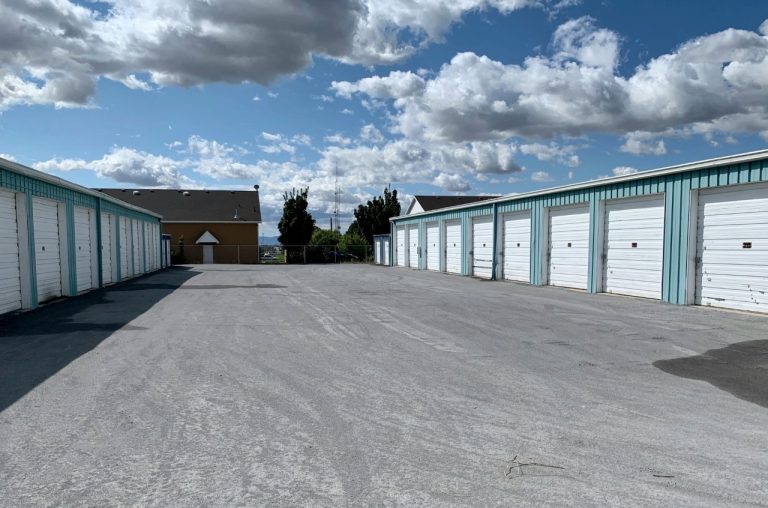
| Self-storage unit | Projects lasting weeks or months | Secure, clean, sized to your needs | Trips back and forth; climate control costs extra |
| Movers pack, move and store | Kitchen, flooring or whole-house remodels | No lifting or truck rental on your part | Scheduled access instead of drop-in |
| Friends or relatives | A few boxes of low-value items | Usually free | Limited space, no security or insurance |
Cover your furniture in the room
If the crew is only painting or replacing fixtures, push furniture to the center of the room and cover it with plastic sheeting or drop cloths, taped at the base. This doesn’t work when you are changing the flooring, because every piece has to come out of the room anyway.
Use a room, garage or basement that isn’t being renovated
A spare bedroom, an attic, a shed or a basement outside the work zone is the cheapest temporary storage during a renovation. Pack items properly rather than piling them in, keep them off a concrete floor, and close the door against dust. Garages and basements can be damp, so they suit sturdy items better than upholstery, electronics or paper; the pros and cons of using your basement as storage are worth a look first. Packing a whole room while managing contractors is a lot, and packing and unpacking services make it go much faster.

Rent a portable storage container
A portable storage container is delivered to your driveway, you load it at your own pace, and it stays there until the project ends. The advantage is access right outside your door. Make sure it has a sturdy lock, park it in a well-lit spot, and check with your city or homeowners association before placing it on the street. A metal box in the sun gets hot inside, so keep heat-sensitive items out of it. If you live in an open-plan loft with few closets, outside storage like this may be your only option, a common trade-off of loft apartment living.
Rent a storage unit
For a project that runs longer than a few weeks, a self-storage unit is the most common choice. Facilities typically have gated access and cameras, and the unit is clean and dry compared with a garage. Don’t assume your things are insured just because they are in a facility: ask what the facility covers and check whether your homeowners or renters policy extends to stored items. Hiring local movers to carry furniture to the unit saves you renting a truck and protects floors you have just paid to redo.
Let movers pack, move and store everything
For a kitchen, flooring or whole-house remodel, the simplest route is to have one company pack your belongings, move them into storage and bring them back when the work is done. Spyder Moving and Storage offers storage services alongside its moving crews, so you don’t coordinate a truck, a unit and helpers separately. Homeowners in Colorado can also read how movers help during a renovation in Denver.
Keep your belongings with friends or relatives
If friends or family have spare space they rarely use, you can store a few boxes there. It won’t be as safe or spacious as a storage unit, so keep it to small items that aren’t valuable or fragile.
How should you pack your belongings before the renovation starts?
Start packing at least a week before demolition, room by room, beginning with the spaces the crew will open first.
- Set aside what stays with you: documents, medications, jewelry, laptops and chargers go in a separate bag you keep, not in storage.
- Number every box and keep a simple list of what is in each one, so you can find the blender or the winter coats without opening ten boxes.
- Wrap furniture in breathable covers such as moving blankets or cotton sheets for storage; save plastic for dust protection inside the house.
- Take apart large pieces such as bed frames and table legs, and tape hardware in a labeled bag to the piece it belongs to.
- Pack books and dishes in small boxes so they stay liftable, and fill gaps with paper so contents don’t shift.
If you are storing for months rather than weeks, a few extra steps keep insects and rodents away; follow these tips for keeping pests out of long-term storage.
How do you organize a storage unit you’ll use during the remodel?
A renovation is different from a move: you will probably need things from the unit before the project ends. Pick the size accordingly. A small unit handles paint and tools; furniture from one or two rooms plus flooring, cabinets or tile needs a medium unit; a full remodel usually calls for a large one. Cramming everything into a unit that’s too small leads to crushed boxes and tip-overs.
Inside, put items you may need at the front and furniture you won’t touch until the end at the back. Keep a narrow aisle clear, stack heavy boxes at the bottom, and tape a plan of the unit with box numbers near the door. When the work is done, residential movers can bring everything back and set the furniture in the finished rooms.
How to store renovation materials without damaging them
Furniture isn’t the only thing that needs a safe place during a remodel. Paint, flooring and tools often sit for weeks before they’re used, and in a hot, humid climate like Mississippi’s they can spoil before the crew gets to them. Heat weakens adhesives and softens vinyl, humidity makes wood swell, and damp air in a garage or shed invites mold and rust. Replacing ruined supplies delays the project and raises its cost.
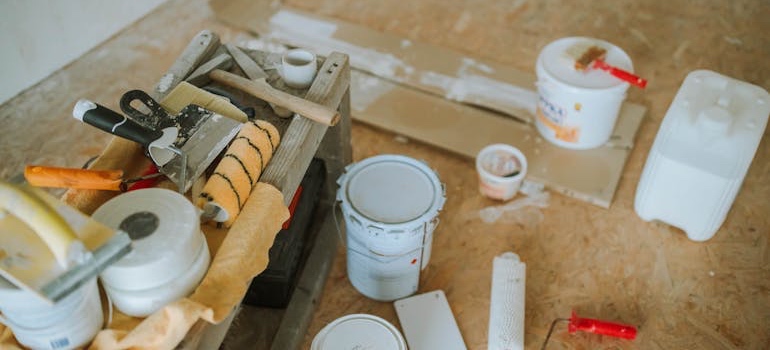
Paint
Keep cans away from freezing temperatures and extreme heat, and check the label for the recommended storage range. Store them upright on shelves rather than on concrete, because moisture moves up through concrete and rusts lids from the bottom. Seal lids tightly and write the room, finish and date on each can so touch-ups are easy later.
Flooring
Wood changes shape in damp air, laminate swells at the seams, vinyl softens in heat, and tile cracks under uneven pressure. Stack boxes flat so the weight is spread evenly, protect the box edges, and keep everything on pallets or raised shelves, off the concrete. Many flooring makers also ask you to let the boards adjust to the room before installation, so check the instructions before you move them out of storage.
Tools and batteries
Wipe hand tools clean and dry before storing them, and add a light coat of oil to bare metal to slow rust. Power tools go in sealed bins with a moisture absorber, and batteries belong indoors at moderate temperatures. A simple rack keeps tools visible and stops hardware from disappearing into loose bins.
Which materials need a climate-controlled unit?
Paint, adhesives, vinyl, wood flooring, batteries and electronics do best in a climate-controlled unit, especially through a Mississippi summer. Tile, stone, steel tools and sealed fixtures are fine in a standard unit. Use breathable covers rather than plastic wrap for wood and cabinets, since plastic can trap moisture, and put drip trays or absorbent pads under paint and glue. For more on heat and humidity, see what you should never store in a Mississippi storage unit during summer.
How do you protect the things that stay in the house?
Whatever stays at home needs protection from dust and debris. Close the doors of rooms that are not being renovated, cover vents near the work area, and wrap anything left in place in plastic sheeting taped at the edges. Ask the contractor to seal doorways to the work zone with plastic.
If your home was built before 1978, the paint being sanded or cut may contain lead. Contractors paid to disturb painted surfaces in those homes must follow the EPA’s lead-safe work practices, which include containing the work area. Removing your belongings from that area before work begins keeps lead dust off furniture, toys and clothes.
Plan storage around your renovation schedule
Ask your contractor for a realistic timeline, then book storage for a little longer than that, since renovations often run late. Decide early which rooms empty first, and schedule the move-out a few days before demolition so nothing is rushed.
Whether you need one room cleared or the whole house packed, Spyder Moving and Storage can pack your belongings, move them into storage and bring them back once the work is finished, from offices in Oxford, Hattiesburg, Memphis, Denver and Colorado Springs. Get a free estimate to plan how to store your items during a home renovation.
Frequently Asked Questions
Where should I store furniture during a renovation?
Store furniture in a room the crew won't touch for small projects, and in a storage unit or a mover's storage for flooring, kitchen or whole-house remodels. A portable container in the driveway works if you have the space and local rules allow it. Upholstered and wood pieces should not sit in a damp garage or basement for weeks.
What are my options for temporary storage during a renovation?
The main options for temporary storage during a renovation are covering items in place, using a room or garage outside the work zone, renting a portable container, renting a self-storage unit, or having movers pack and store everything. Most homeowners combine two of these, based on how long the project lasts and how much of the house is affected.
Do I need a storage unit during a home renovation?
You need a storage unit during a home renovation when floors are being replaced or several rooms are worked on at once, because furniture can't stay in the work zone and spare space at home runs out. For painting or a one-room project, covering furniture or moving it to another room is usually enough.
How do you protect furniture during a renovation?
Protect furniture during a renovation by moving it out of the work area whenever possible and wrapping anything that stays in plastic sheeting taped at the edges. Close doors to other rooms, cover nearby vents, and ask the contractor to seal the work zone with plastic to keep dust contained.
Can movers store my belongings while my house is being renovated?
Yes, many moving companies, including Spyder Moving and Storage, can pack your belongings, move them into storage and deliver them back when the renovation is done. This saves you renting a truck, finding helpers and loading a unit yourself.
How do you store renovation materials like paint and flooring?
Store paint upright on shelves off concrete, sealed and within the temperature range on the label, and keep flooring boxes flat on pallets so the weight is spread evenly. In hot, humid climates, wood flooring, vinyl, adhesives and batteries are best kept in a climate-controlled space.
Free, no-obligation estimate
Get your free moving quote
Tell us where you are moving from and to, and our team will get back to you with a quote. Serving Mississippi, Tennessee and Colorado. Prefer to talk? Call (800) 221-3560.
"*" indicates required fields