

How to Organize an Interstate Move Out of Colorado During Winter Conditions

Key takeaways
Pick a weekday with one or two backup dates, and avoid March, Denver’s snowiest month. Check COtrip.org before the truck leaves. Colorado’s Traction Law applies on I-70 from September 1 through May 31, and commercial trucks over 16,000 pounds must carry chains on more than 1,400 miles of highway during that period.
An interstate move out of Colorado in winter depends on two things you can’t control: mountain passes and wind on the plains. I-70 can close for hours during a storm, and cold weather slows packing, loading, and driving. So learning how to organize an interstate move out of Colorado starts with backup dates, winter-ready packing, and a mover who plans around road reports. Spyder Moving and Storage CO moves families out of the Denver metro year-round, and this guide covers what to plan for.
What makes an interstate move out of Colorado in winter different?
Leaving Colorado in winter is different because every route out of the state has its own weather risk. Mountain routes face snow and chain laws, while eastern routes face high wind and blowing snow. As a result, when you organize an interstate move from Colorado, the route decides how much buffer time you need. Here is what to expect on each main exit:
| Route out of Colorado | Highest point | Main winter risk | What to check |
|---|---|---|---|
| I-70 west to Utah | Eisenhower-Johnson Memorial Tunnel (average 11,112 feet) and Vail Pass (10,662 feet) | Snow, Traction Law and chain-law closures between Morrison and Silverthorne | Closures on COtrip.org and whether the Traction Law or Chain Law is active |
| I-70 east to Kansas | No mountain pass; open eastern plains | Gusts up to 70 mph and blizzard safety closures near Limon | Wind and closure alerts for the Limon area on COtrip.org |
| I-25 north to Wyoming and I-80 | I-80 summit between Cheyenne and Laramie (8,640 feet) | Strong winds that blow trucks and trailers onto their sides | Wind warnings and closures on wyoroad.info |
| I-25 south to New Mexico | Raton Pass at the state line (7,834 feet) | Snow on the Palmer Divide between Denver and Colorado Springs, then on Raton Pass | COtrip.org for the Palmer Divide and nmroads.com for Raton Pass |
Mountain closures can last for hours. On March 14, 2024, for example, CDOT closed I-70 in both directions between Morrison and Silverthorne because semis lacked chains.
When is the best time to leave Colorado in winter?
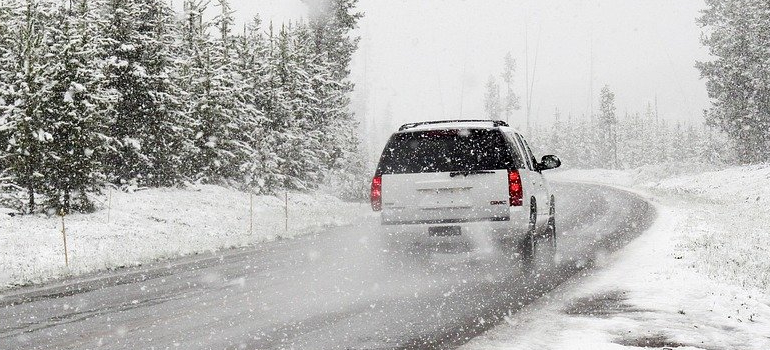
Early winter is usually easier than late winter. According to the National Weather Service in Boulder, March typically brings about 20 percent of Denver’s annual snowfall, and December ranks second. Denver averages 56.6 inches of snow per season over the long-term record. Therefore, a January or early February move often has fewer major storms than a March move. The same timing applies if you head east, since I-70 across the eastern plains sees wind and blowing snow too. Ask your interstate movers to keep March storms in mind when they set the schedule.
Whatever month you pick, hold one or two backup dates. In addition, weekdays leave more room to reschedule, because weekend slots fill first. The cheapest and least stressful times of year to move in Colorado also fall outside summer, so a winter date can save money if you plan around the weather.
Is it cheaper to make an interstate move from Colorado in winter?
Winter is the off-season for moving, because most families move between late spring and summer. As a result, more dates and crews are usually open from November through February. Ask your mover whether it offers lower off-season rates, and get the price in a written estimate.
Also ask, in writing, what happens if a storm closes the roads. Some movers reschedule at no charge, while others charge for a truck that already left. Knowing the policy upfront protects your budget if I-70 or I-25 shuts down.
What does Colorado’s Traction Law require?
From September 1 through May 31, the Traction Law is in effect on the I-70 mountain corridor between Dotsero and Morrison. CDOT can also activate it on other state highways during storms. When it applies, a 4WD or AWD vehicle needs tires with at least 3/16-inch tread that are rated for winter, mud and snow (M+S), or all-weather use. A 2WD vehicle needs chains or an approved traction device on at least two drive tires.
Fines are steep. The Colorado Department of Transportation Traction Law page lists $100 plus a $33 surcharge, rising to $500 plus $157 if a non-compliant vehicle causes a lane closure. Moving trucks also face Colorado’s Must Carry Law: commercial vehicles over 16,000 pounds must carry chains from September 1 to May 31, whatever the weather. Driving your own car behind the truck? Then check your tires before you book the date.
How do you organize packing for an interstate move in winter?
Cold air weakens thin cardboard, hardens plastic, and loosens tape. So use double-wall boxes and tape every seam twice. Pack liquids, cleaning products, and paint in sealed plastic bins, because they can freeze and burst in an unheated truck. Wrap glass and ceramics in extra padding, since they crack more easily when cold. Finally, label every box on two sides so the crew can sort them quickly in the snow.
If you don’t want to handle it yourself, a full or partial packing service brings the boxes, wrap, and padding that hold up in freezing temperatures.

How do you prepare your home for loading day in snow?
Safe access protects both your belongings and the crew. Shovel the driveway, walkways, and the spot where the truck will park the night before. Then spread ice melt in the morning, and keep extra on hand if snow keeps falling. Inside, lay floor runners or cardboard over hardwood and carpet to catch melting snow.
Keep one room heated for last-minute packing and warm breaks. Also, turn on porch and garage lights, because winter loading often starts before sunrise. Our residential moving crews wrap furniture in moving blankets and plastic before carrying it out, which keeps wood and upholstery dry.
Foothill homes add another step. Steep, icy driveways may not fit a full-size truck, so Evergreen movers check truck access and parking before loading day.

What to confirm before an interstate move from Colorado
Federal rules protect you on any move across state lines. First, look up the mover’s USDOT number on the FMCSA Protect Your Move site. Next, make sure you receive the “Your Rights and Responsibilities When You Move” booklet. Then compare estimates carefully: with a binding estimate, the mover can’t charge more at delivery, and with a non-binding estimate, the mover can’t demand more than 110% of the estimate at delivery.
Also agree on specific delivery dates or a delivery spread in writing, not “as soon as possible.” For winter, ask how the crew handles weather delays and whether the truck carries chains. An interstate moving team that plans the route around road reports keeps your delivery window realistic.
How do you check road conditions before you leave?
Use official sources, because GPS apps don’t always show new closures. In Colorado, check COtrip.org, the COtrip Planner app, or dial 511 (1-800-288-1047). For Wyoming, use wyoroad.info or call 1-888-996-7623, and for New Mexico, use nmroads.com. In addition, plan to leave mid-morning, after plows have cleared the overnight snow.
Keep these essentials in your car instead of the truck:
- Coats, boots, gloves, and blankets
- Medications, chargers, and a power bank
- Water, snacks, and a flashlight
- Sand or traction mats for icy pull-offs
- IDs, the moving contract, and the inventory list

What should not ride in a cold moving truck?
A trailer can sit below freezing for days on a long-distance route. So move these items in your own heated car instead:
- Houseplants: Most die after a few hours in freezing temperatures.
- Liquids and paint: They can freeze, expand, and leak onto other boxes.
- Medications: Many must stay within a set temperature range.
- Pets: Pets always ride with you, with water, a blanket, and planned stops.
- Laptops, phones, and hard drives: They hold your data and are sensitive to sudden temperature changes.
Before you leave, also set up gas, electricity, and water at the new home. That way, the heat is already on when the crew starts unloading.
How do you protect belongings after the drive?
Unpack carefully on arrival. Check furniture, electronics, and boxes for moisture, dents, or cracks as they come off the truck, and note any damage on the inventory right away. Let TVs, computers, and appliances warm to room temperature before you plug them in. For shipped computer equipment, IBM recommends letting the packaged product acclimate for 24 hours.
If your new home isn’t ready, climate-controlled storage services protect wood furniture, electronics, and artwork from freezing temperatures and condensation.
How to organize an interstate move out of Colorado with Spyder
A winter move across state lines goes smoothly when you choose the right route, hold backup dates, and pack for freezing temperatures. In addition, Spyder Moving and Storage covers packing, storage, and delivery in one plan, and a free written estimate shows the price before you book.
Not sure how to organize an interstate move out of Colorado in winter? Dial (800) 221-3560 to reserve a winter moving date and a backup day with Spyder Moving and Storage.
FAQs
Frequently Asked Questions
Is it a bad idea to move out of Colorado in winter?
No, but it needs more planning. Pick a weekday with one or two backup dates, avoid March if you can, and check COtrip.org before the truck leaves.
Do moving trucks need chains in Colorado?
Commercial vehicles over 16,000 pounds must carry chains or approved traction devices from September 1 to May 31 on more than 1,400 miles of Colorado highway, including I-70.
How long does a move from Denver to another state take in winter?
Driving alone takes about 8 hours to Salt Lake City (around 520 miles), about 9 hours to Kansas City (around 600 miles) and about 6.5 hours to Albuquerque (around 450 miles). The truck arrives within the delivery dates or delivery spread in your contract, and a storm closure on I-70 or I-25 can add a day or more.
How do I check if I-70 is closed?
Check COtrip.org, the COtrip Planner app, or dial 511 in Colorado. These sources update closures faster than most GPS apps.
Does the moving price change if a storm pushes back my move date?
It depends on the mover's written policy, so ask before you book. A binding estimate fixes the price for the services it lists, but services added because of the delay, such as storage in transit while roads are closed, can cost extra.
Free, no-obligation estimate
Get your free moving quote
Tell us where you are moving from and to, and our team will get back to you with a quote. Serving Mississippi, Tennessee and Colorado. Prefer to talk? Call (800) 221-3560.
"*" indicates required fields