

The Risks of Hiring Cheap Movers

Key takeaways
The main risks of hiring cheap movers are lowball estimates that grow after loading, hostage loads, unreliable crews, and coverage that pays only 60 cents per pound per article under released value. Before you book, look up the mover's USDOT and MC numbers with the FMCSA, get a written binding or not-to-exceed estimate based on a survey of your belongings, and choose full value protection in writing.
The risks of hiring cheap movers are easy to overlook when you are trying to keep costs down during a move. A low quote is tempting, but what looks like a bargain on paper can turn into damaged belongings, surprise charges, or a no-show on moving day. Spyder Moving and Storage put this guide together so you know exactly what to check, and which federal rules protect you, before you commit to any moving company.
What Are the Risks of Hiring Cheap Movers?
The risks of hiring cheap movers fall into four groups: moving scams and lowball estimates, unreliable service, hidden charges added after loading, and little or no coverage for damaged or lost items. Not every budget mover is dishonest, and a fair price is not a warning sign by itself. What matters is whether the company can prove who it is and puts its price and liability in writing.
| Risk | Typical warning sign | How to protect yourself |
|---|---|---|
| Scam or fraudulent estimate | Price given by phone or online without seeing your belongings | Get written estimates from several movers based on an in-person or video survey |
| Hostage load | Large cash deposit demanded, blank or incomplete paperwork | Verify the USDOT and MC numbers before anything is loaded |
| Hidden fees | Non-binding estimate with vague line items | Ask for a binding or not-to-exceed estimate that lists stairs, long carries and packing |
| Damage with no real coverage | “All your goods are covered by our insurance” | Choose full value protection in writing and declare high-value items |
| Broker passes your job on | No trucks, no crews, no physical address | Ask for the name and USDOT number of the carrier that will actually move you |

Why Are Cheap Movers More Likely to Be a Scam?
A lowball estimate given without looking at your home is one of the most common tactics fraudulent movers use. The quote looks attractive, you book, and then the company either disappears, holds your belongings for a higher payment, or adds charges built into a contract you did not read carefully.
Before booking anyone, get written estimates from several companies and be suspicious of one that comes in far below the rest. The Federal Motor Carrier Safety Administration lists the warning signs in its red flags of moving fraud, including:
- an estimate given by phone or online, sight unseen, or a promise to set the price after loading;
- a demand for cash or a large deposit before the move;
- a request to sign blank or incomplete documents;
- a website with no local address and no registration or insurance details;
- a rental truck on moving day instead of a company-owned, marked truck.
Any one of these is enough reason to walk away. Many of the cheapest online quotes also come from brokers rather than movers, which is covered in the broker section below.
Moving in Mississippi, Tennessee or Colorado?
Spyder Moving gives free, no-obligation quotes. Licensed, bonded and insured.
Unreliable Service and Last-Minute Cancellations
Even when a cheap mover is not a scam, it is often unreliable. Corners get cut on equipment, staffing, and care for your belongings. Items get damaged because the crew lacks training, or the job takes far longer than planned because there are too few people on the truck. In the worst cases, the company cancels on moving day, leaving you without a truck and without time to find a replacement.
Before signing anything, ask who will be on the truck, whether they are employees or day labor, and how the company handles a cancellation on its side. A mover that owns its trucks and employs its own crews has far fewer reasons to cancel than one that hires help job by job.

How Do Cheap Movers Add Hidden Fees?
A low base estimate often hides charges that only appear once your things are on the truck. Stairs, long carries, oversized items, fuel surcharges and packing materials can all be stacked on top of the original price if the contract allows it. Cheap movers commonly add a long-carry fee when the truck cannot park close to the door, a flight charge for each staircase, and a disassembly fee nobody mentioned upfront.
The type of estimate decides how much room the mover has. Spyder’s guide to binding, non-binding and not-to-exceed estimates explains each one in detail. In short:
- Binding estimate: a fixed price. On an interstate move, the mover cannot demand more than 100 percent of it at delivery unless you add items or services.
- Non-binding estimate: an approximation. Federal rules let an interstate mover collect no more than 110 percent of it at delivery; any remaining charges are billed later.
- Not-to-exceed estimate: a ceiling. You pay the lower of the estimate or the actual charges.
Read every line before moving day, and never sign an estimate that leaves the price open “until we see the load.”
What Happens If Cheap Movers Damage Your Belongings?
This is where cheap quotes cost the most. On an interstate move, federal rules give you two liability options. Full value protection makes the mover liable for the replacement value of lost or damaged items, up to the declared value of the shipment; it is the default and costs more. Released value is the no-cost option, but it caps the mover’s liability at 60 cents per pound per article, and you have to choose it in writing. Under released value, a 10-pound item is worth $6 to the mover no matter what you paid for it.
Ask any mover to explain its valuation options in writing, list items worth more than $100 per pound (jewelry, art, collectibles) on the paperwork, and be wary of anyone who says “everything is covered by our insurance.” Before you sign, it also helps to go through Spyder’s list of things to check before signing a moving contract, which covers liability, payment terms and claims.
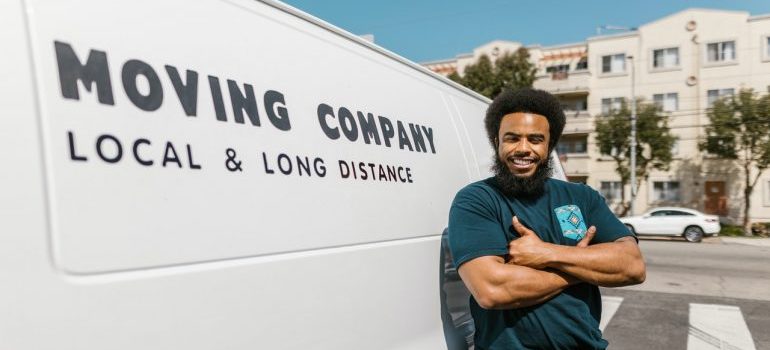
Common Moving Scams and How to Counter Them
A lowball quote is usually the opening move. Here is how the most common moving scams play out once you have booked, and what stops each one.
The hostage load
Your belongings are loaded, and before delivery the mover demands far more than the estimate. Refuse, and the truck does not unload. This is most common on long-distance moves, where the mover has everything you own. On an interstate move, the mover must deliver once you pay 100 percent of a binding estimate or 110 percent of a non-binding one. The reliable counter is to verify the company before anything is loaded: USDOT number, physical address, independent reviews, and a signed written estimate.
The bait-and-switch estimate
The mover quotes low by phone, then adds stairs, long carries, packing materials and fuel on moving day, or quietly switches a binding estimate to a non-binding one. Some hourly crews simply work slowly. Counter it by insisting on an in-person or detailed video survey before any price is confirmed, and by getting the estimate type stated in writing.
Cash-only deposits
A modest booking deposit is normal. A demand for a large deposit, or for cash, a money order or a payment app instead of a credit card, is a red flag. Credit cards let you dispute a charge; cash does not, which is exactly why rogue movers prefer it.

What to do if you have been scammed
If a mover holds your belongings or refuses to honor the original price, contact local law enforcement first, then file a complaint with the FMCSA’s National Consumer Complaint Database at nccdb.fmcsa.dot.gov or by phone at 1-888-368-7238. Have the mover’s USDOT and MC numbers ready, along with your origin and destination. If you paid by card, dispute the charge right away, and keep the estimate, every message, and any added charges.
Are Moving Brokers Legit?
Yes, moving brokers are legal businesses when they are registered with the FMCSA, and many cheap online quotes come from them. The catch is what a broker is: a middleman that does not own trucks or employ crews. You request a quote, the broker collects your details and sells the job to a carrier, and that carrier, which you may never have researched, performs the move.
That structure creates predictable problems. You have little say over which carrier shows up. Questions about pickup dates, delivery windows or claims bounce between you, the broker and the carrier. The carrier may reprice the job after seeing your shipment. And if something goes wrong, the broker you booked with is not the company holding your furniture.
If you do use a broker, confirm its FMCSA registration, get its fees and cancellation policy in writing, and ask for the name and USDOT number of the carrier before you pay. If you want one point of contact, book a moving company directly, especially for very long routes such as a Tennessee to California move, where your belongings spend days on the road.
Why Movers Have to Be Certified and Trained
Movers certification and training are what separate a professional crew from a few people with a rented truck, and they are the first thing a budget operator skips. There is no single federal “mover certificate.” For interstate moves, the legal requirement is FMCSA registration: a USDOT number plus operating authority, shown as an MC number. Some movers also hold voluntary industry credentials, such as the ProMover program of the American Trucking Associations’ Moving & Storage Conference.
Training shows up in the result. Trained movers lift heavy pieces without injury, pack fragile and oddly shaped items so they survive the drive, and load a truck so nothing shifts. Commercial moves raise the bar again, since office equipment and electronics need specific handling, which is why experienced commercial movers plan those jobs separately. When a trained crew gets everything there in one piece, it is worth knowing how to thank your movers in a way they will appreciate.
How to verify a mover’s credentials
- Ask for the full legal company name, USDOT number and MC number; a legitimate interstate mover gives all three without hesitation.
- Look the company up with the FMCSA and confirm its registration, insurance on file and complaint history. The FMCSA’s steps to select a mover walk through the checks.
- Make sure you receive the federal booklet “Your Rights and Responsibilities When You Move” with your estimate; interstate movers must provide it, either as a copy or a link.
- Ask what training the crew has and whether the people on the truck are employees or day labor.
- Search the business address on a map; a residence, an empty lot or no result is a problem.
- Read reviews on platforms the company does not control and look for patterns, such as delivery-day price increases or missing items.

How Can You Hire an Affordable Mover Safely?
Most problems with cheap movers disappear when you do a few checks before signing:
- Only book companies that give you a written estimate and a written contract.
- Reject any estimate given without a look at your belongings in person or by video.
- Ask for a binding or not-to-exceed estimate so the price cannot climb after loading.
- Choose your liability option in writing and know what released value really pays.
- Pay a reasonable deposit by credit card, never a large cash deposit.
- Confirm the mover owns its trucks and employs its own crew, or get the carrier’s name if it is a broker.
Why Spyder Moving and Storage Is the Safer Choice
The risks of hiring cheap movers come down to one thing: no accountability. Spyder Moving and Storage is a licensed and bonded mover with its own crews and trucks, registered with the FMCSA under USDOT 3187084 and MC-132217, so you can check our record before you book. Our residential movers in Memphis work from our office at 3290 New Getwell Rd, and we also have offices in Oxford and Hattiesburg, MS, and Denver and Colorado Springs, CO.
For moves across state lines, where the fraud risk is highest, our interstate movers from Tennessee put the estimate and your liability options in writing before a single box is loaded. To compare a real quote against the cheap ones, request a free estimate or call 1-800-221-3560.
Frequently Asked Questions
What is the biggest risk of hiring cheap movers?
The biggest risk is a lowball estimate that turns into a much higher bill once your belongings are on the truck, sometimes with the shipment held until you pay. Get written estimates based on a look at your belongings, verify the mover's USDOT number with the FMCSA, and ask for a binding or not-to-exceed estimate.
Are moving brokers legit?
Yes, moving brokers are legal when they are registered with the FMCSA, but they do not own trucks or employ crews and instead sell your job to a carrier. If you use one, get its fees and cancellation policy in writing and ask for the name and USDOT number of the carrier that will actually move you.
How does mover certification work?
There is no single federal mover certificate; for interstate moves the legal requirement is FMCSA registration with a USDOT number and an MC number for operating authority. Some movers also hold voluntary industry credentials such as the ATA Moving & Storage Conference's ProMover program, so ask which registrations and credentials a company has and check them yourself.
What kind of training do professional movers have?
Professional movers are trained in safe lifting, packing fragile and oddly shaped items, padding and wrapping furniture, and loading a truck so nothing shifts in transit. Ask any company what training its crew has and whether the people on the truck are its own employees or day labor.
What should you do if you are scammed by a moving company?
Contact local law enforcement first, then file a complaint with the FMCSA's National Consumer Complaint Database at nccdb.fmcsa.dot.gov or call 1-888-368-7238. If you paid by credit card, dispute the charge right away, and keep the estimate, contract and every message from the mover.
How do you find cheap movers without getting scammed?
Compare written estimates from several licensed movers that survey your belongings in person or by video, and be wary of any quote far below the others. Confirm each company's USDOT and MC numbers, pay deposits by credit card, and make sure the estimate type and liability option are written into the contract.
Free, no-obligation estimate
Get your free moving quote
Tell us where you are moving from and to, and our team will get back to you with a quote. Serving Mississippi, Tennessee and Colorado. Prefer to talk? Call (800) 221-3560.
"*" indicates required fields